
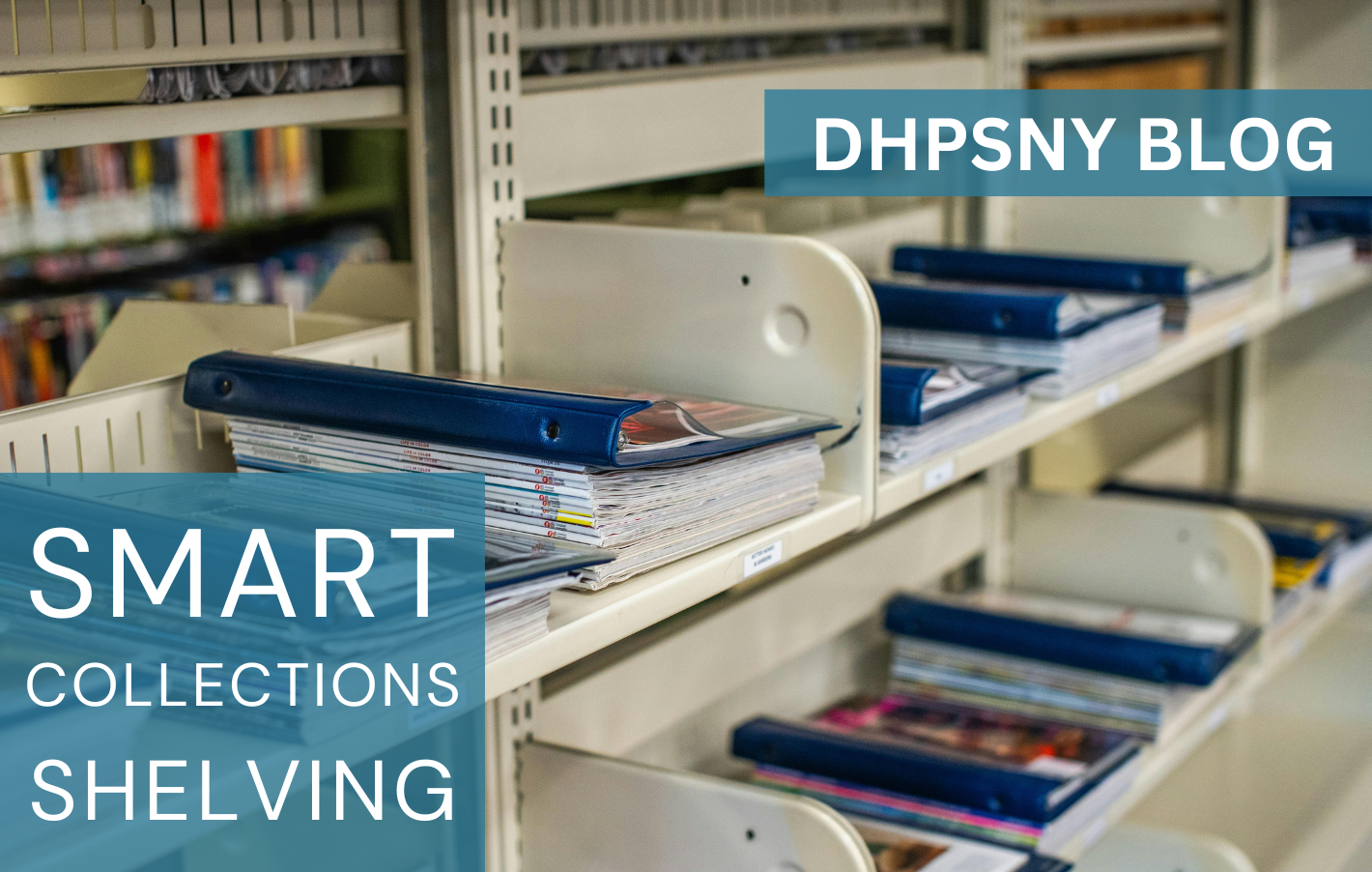
For many collecting institutions, existing storage furniture is often a patchwork of what has been available over the years. Shelving may have been inherited from a previous occupant, donated by another organization, or repurposed from office or library use. Replacing it with new archival shelving is often unrealistic. Fortunately, that's not always necessary.
While the "perfect" storage setup isn't attainable for every institution, a few thoughtful choices about shelving materials, placement, and how collections are stored can go a long way toward reducing risks and making collections easier to care for.
Work with the Shelving You Have
Metal shelving is generally considered the best choice for collections storage because it is durable, stable, and does not release acids or other compounds that can affect collection materials over time.
Many institutions, however, rely on wooden shelving that has been in place for years. Wood naturally releases acidic compounds that can migrate into books, paper, textiles, and other collection materials stored in direct contact with the shelf. While this off-gassing is greatest when wood is new and decreases as it ages, even older shelving can continue to release low levels of acids over time. For that reason, metal shelving is generally preferred, but existing wooden shelving can often be used successfully with a few simple precautions. Painting or sealing wooden shelving provides some protection by slowing the movement of acids from the wood, but it does not eliminate the risk entirely. Newly painted or sealed shelves should also be allowed to fully cure before collections are returned, as fresh finishes release volatile compounds while they dry.
If replacing wooden shelving isn't practical, there are several simple ways to reduce potential risks. Storing collections in archival boxes provides an added layer of protection, while placing an archival-quality acid-free board or another appropriate barrier material between the shelf and collection materials helps minimize direct contact with the wood. Barrier materials should be replaced periodically, as they gradually absorb acids over time.
Wire shelving is another common option. It is well suited for boxed collections, since the boxes provide a stable, continuous surface and prevent materials from resting directly on the wires. Unboxed books, photographs, and objects are generally better supported on solid shelving or with an appropriate shelf liner. Understanding the strengths and limitations of the shelving already in use allows institutions to make practical improvements without replacing existing storage furniture.
Think About Where Shelving Is Located
The location of shelving within a building can have just as much impact on collections as the shelving itself. Whenever possible, avoid placing shelving directly in front of windows, next to radiators or heating vents, beneath plumbing, or in areas that are prone to moisture. If shelving must be located against an exterior or foundation wall, leaving a small gap between the shelving and the wall improves air circulation and makes it easier to spot potential water or pest problems before they affect collections.
Shelving should also keep collections safely off the floor. Keeping the bottom shelf at least 4 inches above the floor provides protection from minor water leaks, plumbing issues, and routine floor cleaning, while making it easier to clean beneath shelving and inspect the area for signs of moisture or pests.
Store Materials So They're Easy to Retrieve
The way collections are arranged on shelving also plays an important role in their long-term preservation. Boxes stacked too high can become unstable and difficult to remove safely, while heavy boxes are generally best stored on lower shelves to reduce the risk of damage during handling or injury to those retrieving them. Shelves should not be so full that boxes need to be forced into place or dragged out, as this can damage both the container and the materials inside.
Leaving enough room to comfortably remove boxes, books, and objects without shifting neighboring materials reduces unnecessary handling and wear while making collections easier to access. It also makes routine housekeeping and inspection easier, allowing staff and volunteers to clean around shelving and more quickly identify signs of dust buildup, pests, water intrusion, or other preservation concerns. For unboxed collections and three-dimensional objects stored on open shelving, loose-fitting dust covers can provide an additional layer of protection from dust and debris. Covers made from washed, unbleached muslin or Tyvek are commonly used, though clean cotton sheets can also be an effective option for many collections. These small adjustments improve both preservation and day-to-day collections management without requiring any additional storage furniture.
Learn More
Improving collections storage doesn't have to happen all at once. Many institutions make meaningful progress by gradually reorganizing shelves, relocating vulnerable materials, adding protective barriers to wooden shelving, or incorporating dust covers for collections stored on open shelving. Small, incremental changes like these can reduce everyday risks while creating a safer, more functional storage environment for collections.
Interested in learning more about identifying risks in collections spaces? DHPSNY's free webinar, Introduction to Risk Assessment for Collecting Institutions, explores common risks to collections, including storage, environmental conditions, housekeeping, and building issues, and provides practical strategies for identifying preservation priorities and making improvements based on your institution's needs.
Do you have a preservation topic, question, or creative solution you would like us to cover in this series? Reach us by email at info@DHPSNY.org, or connect with us on the DHPSNY Facebook page or DHPSNY Community Facebook Group.